H5 Avian Influenza (Bird Flu) Update
H5 avian influenza, or H5 bird flu, is a highly contagious viral disease that primarily affects birds, but can also infect other animals and, rarely, humans. It is of global concern as it spreads across the world’s wild and migratory birds.
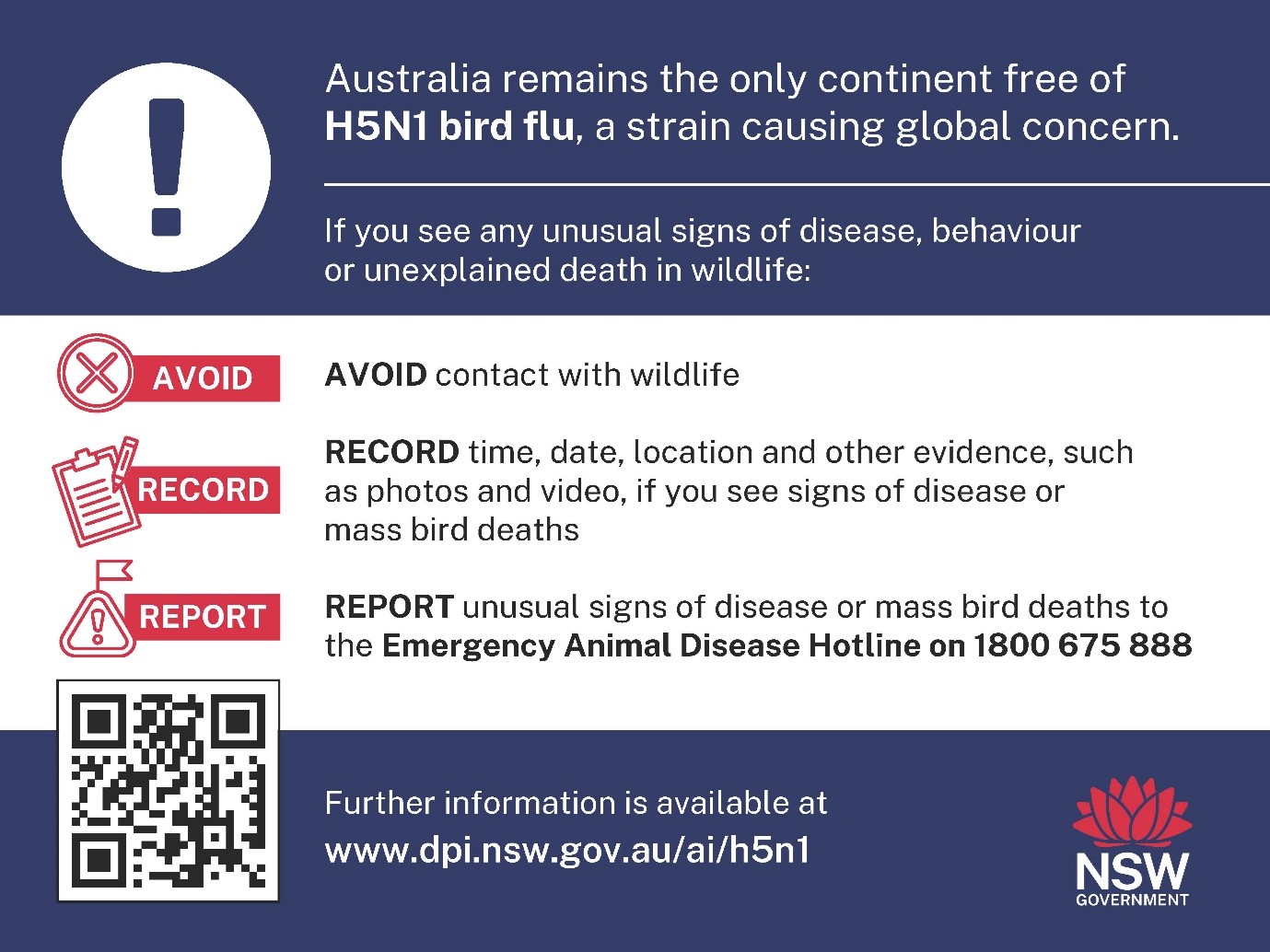
The H5 strain has NOT yet been detected in animals in Australia to date but it has been found in nearby countries.
For this reason, the Lord Howe Island Board is sharing this update as part of a state and national preparedness effort aimed at helping communities prepare for the possible impacts of H5 avian influenza.
A response plan has been developed. The Board is working with NSW and Australian Government agencies to develop a localised preparedness and response plan that reflects the Island’s unique environment and World Heritage values, community needs and visitor context.
Community members are encouraged to stay alert around gardens, roadsides, beaches and walking tracks, particularly where birds gather or nest. Early reporting helps manage risk.
What to Do?
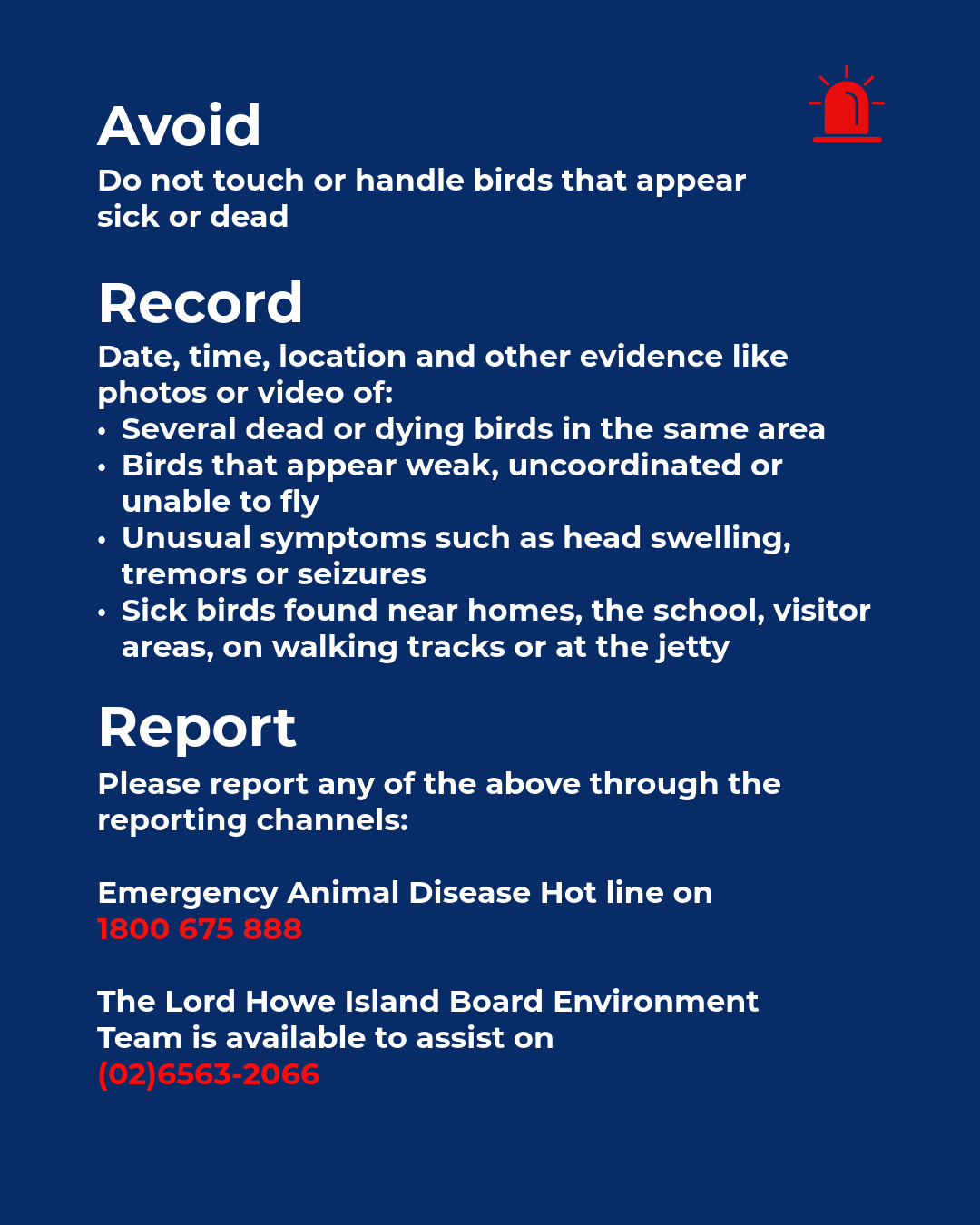
- H5 avian influenza is a nationally notifiable disease. This means any animals showing signs of the disease consistent with H5 avian influenza must be reported to the Emergency Animal Disease Hotline on 1800 675 888.
- The Lord Howe Island Board Environment Team is available to assist on (02) 6563-2066
Who is Responsible?
- The NSW Department of Primary Industries and Regional Development (DPIRD) will lead any response under powers in the Biosecurity Act 2015.
- The Lord Howe Island Board will assist with local communication and coordination. See DPIRD’s avian influenza pages for agency roles and public guidance.
What is the risk to Human Health?
While H5 bird flu does not easily transmit between humans and risk to human health is considered low, infection can occur through close contact with sick animals or contaminated environments, with symptoms ranging from fever and cough to conjunctivitis and severe illness — NSW Health: Avian influenza factsheet. See a doctor if you are experiencing symptoms.
What Could Happen if Avian Influenza is Detected?
If H5 bird flu is ever suspected or confirmed on the Island, health or biosecurity authorities may issue instructions such as:
- Installation of signs or hygiene stations in public or tourism areas
- Guidance for households to avoid contact with sick or dead birds
- Public health advice for residents, workers and visitors
- Movement restrictions in specific zones
- Temporary closures of walking tracks, beaches or nesting areas
Note that these instructions may be issued by the external agencies responsible.
Nesting Season Increases the Need for Awareness
At this time of year, more than a dozen seabird species return to nest on Lord Howe Island, including in areas near homes, walking tracks and beaches. Many of these birds are rare or endangered. Everyone in the community has a role to play in protecting the Island’s birdlife. Whether walking to school, running a business or heading to the beach, early awareness and small actions can make a difference.
How the Community Can Prepare
The current risk remains low. However, taking a few simple steps now can help the Island respond effectively if the situation changes. A confirmed case would trigger a state-led response.
To support local preparedness, residents and businesses are encouraged to:
- Stay up to date with LHIB communications, signage and alerts
- Keep pets away from birds and nesting sites
- Talk to children, staff and guests about not touching injured or dead birds
- Share knowledge or suggestions to assist local planning
- Consider testing and treating water
- Report signs of bird illness promptly via the channels above
- Businesses: review insurance, brief staff and prepare visitor messaging
- Consider how changes to beach or track access might affect daily routines
- Understand that instructions may come from health or biosecurity authorities, beyond the direct control of the Lord Howe Island Board
Contact: For further information contact Liam Murphy at [email protected] or (02) 6563 2066 (ext. 38)
See Department of Climate Change, Energy, Environment and Water: H5 avian influenza for more preparedness information.
For context and national status updates, see NSW H5 preparedness and Outbreak (the Australian Government’s biosecurity portal).